Cobb 500 is one of the most widely used commercial broiler hybrids in chicken meat production. The line has been selected for rapid growth, efficient feed utilisation, good livability and the ability to achieve a uniform flock at different target slaughter weights. In farming practice and online searches, terms such as “Cobb 500 breed” and “Cobb 500 chickens” are commonly used, although technically Cobb 500 should be described as a commercial broiler line or hybrid. Genetic potential is only one of the factors determining the final production result. Day-old chick quality, poultry house preparation, the first hours after placement, access to water and feed, correctly planned nutrition, environmental conditions, digestive health and systematic performance monitoring are equally important.
With Cobb 500, it is particularly important to view production as a complete system. A high final body weight does not automatically mean a good economic result if it has been achieved with excessive feed consumption, poor flock uniformity or increased mortality. Conversely, a flock that is slightly below the published weight objectives may still deliver excellent economic performance if it has a low FCR, high livability and a high proportion of birds within the desired weight range. For this reason, the Cobb 500 weight chart should be treated as a reference point for evaluating flock performance rather than a guarantee of a specific result.
Cobb 500 – weight, feed intake and FCR chart
The following figures apply to an as-hatched Cobb 500 flock, meaning birds are reared without separating males and females. These are production objectives published by Cobb. The company points out that actual performance may vary depending on country, housing conditions, feeding programme, climate, feed ingredient quality and flock health. It is also important to note that the feed conversion ratio shown in the table does not account for mortality.
| Broiler age | Body weight | Cumulative feed intake | FCR |
|---|---|---|---|
| 0 days | 42 g | — | — |
| 7 days | 202 g | 180 g | 0.891 |
| 14 days | 570 g | 588 g | 1.029 |
| 21 days | 1,116 g | 1,320 g | 1.182 |
| 28 days | 1,783 g | 2,359 g | 1.322 |
| 35 days | 2,521 g | 3,635 g | 1.441 |
| 42 days | 3,278 g | 5,100 g | 1.555 |
| 49 days | 4,001 g | 6,749 g | 1.686 |
| 56 days | 4,641 g | 8,549 g | 1.842 |
The table clearly shows how rapidly the broiler’s requirements change with age. Between day 21 and day 35, target body weight rises from 1,116 g to 2,521 g, an increase of more than 1.4 kg in only two weeks. During the same period, daily feed intake and the physiological demands associated with rapid growth increase considerably. At 35 days, Cobb 500 is expected to weigh around 2.52 kg, while by day 42 the target approaches 3.28 kg. This does not mean that every flock should be reared to the same final weight. The target marketing date should reflect customer requirements, feed costs, slaughterhouse specifications and the current profitability of keeping the birds for additional days.
Why is the first week so important?
The first seven days provide an early indication of whether the conditions prepared for the chicks allow them to use their genetic potential. For Cobb 500, the target weight on day seven is approximately 202 g from an initial body weight of around 42 g. This means that the chick increases its body weight to approximately 4.8 times its starting weight. Cobb also points out that every additional gram achieved by day seven may translate into approximately 6–7 g of additional body weight by day 35. This should not be interpreted as encouragement to push growth at all costs, but rather as an indication of how strongly early brooding conditions influence later performance.
If the flock is clearly below the expected weight after the first week, the source of the problem should primarily be sought in the period from hatch through the first few days after placement. Transport conditions, floor and litter temperature, chick activity, the distribution of feed and water sources, starter feed quality, drinker performance, minimum ventilation and temperature uniformity throughout the brooding area should all be reviewed. Delaying such an analysis until day 14 or day 21 means losing the most important period in which the original cause of a poor start can still be identified quickly.
The first hours after placing Cobb 500 chicks
After delivery, the objective is not simply to place all chicks inside the poultry house, but to ensure that as much of the flock as possible quickly starts consuming feed and water. Chicks should be distributed evenly close to feeding and drinking points, and their behaviour should be observed from the first minutes after placement. Birds clustering in a particular area of the house, avoiding certain zones or gathering beneath heating equipment may indicate uneven environmental conditions, drafts, unsuitable temperatures or problems with the heating system. Low activity despite correct temperature should prompt a review of chick quality, transport conditions and the time that has passed since hatch.
Crop-fill assessment is particularly useful during the first day. Cobb recommends evaluating approximately 100 chicks in each brooding zone. After eight hours, at least 85% of the birds assessed should have both feed and water in the crop, while after 24 hours crop fill should be detected in at least 95% of chicks. A hard and clearly filled upper crop may indicate that the chick has found feed but has had insufficient access to water. If a large proportion of crops are soft but contain little feed, the quantity, distribution, physical form and smell of the feed should be evaluated together with ambient and floor temperature.
How can good-quality Cobb 500 chicks be recognised?
Assessment of day-old chick quality should begin before placement. A good Cobb 500 chick should be dry, active and alert, with bright eyes, a well-healed and closed navel, and correctly formed legs. The legs should show no injuries or obvious redness around the hocks. Attention should also be paid to deformities of the beak, neck or limbs, down quality and the bird’s response to changes in position. A simple quality test is to gently place the chick on its back; a healthy, vigorous bird should quickly return to a standing position.
Assessment should not be limited to a few of the best-looking chicks taken from a single box. Much more information can be gained by checking consistency throughout the entire delivery and determining body-weight uniformity. Cobb provides an indicative uniformity of around 80% for good day-old chicks, corresponding to a CV of approximately 7.9%. Representative boxes can be used to determine average body weight, but individual chicks should be weighed when calculating CV and true variation. If significant differences in chick size are already visible at delivery, later performance analysis should take into account the fact that the flock did not have a completely uniform starting point.
Feeding Cobb 500 – starter, grower and finisher
Cobb 500 nutrition should be adapted not only to age but also to the desired final body weight. The breeder publishes separate recommendations for small broilers and for medium and large broilers because the optimum feeding programme for birds intended for earlier processing does not necessarily match the programme for birds kept beyond 40 or 50 days. For medium and large broilers, the programme can be divided into five stages: Starter from day 0 to 12, Grower 1 from day 13 to 28, Grower 2 from day 29 to 39, Finisher 1 from day 40 to 49, and Finisher 2 after day 50. As the birds age, the recommended energy concentration gradually increases, while crude protein and the levels of certain amino acids per kilogram of feed decline.
| Feeding phase | Approximate age | Crude protein | AMEn | Digestible lysine |
|---|---|---|---|---|
| Starter | 0–12 days | 21–22% | 12.13 MJ/kg | 1.26% |
| Grower 1 | 13–28 days | 19–20% | 12.34 MJ/kg | 1.16% |
| Grower 2 | 29–39 days | 18–19% | 12.76 MJ/kg | 1.06% |
| Finisher 1 | 40–49 days | 17–18% | 12.97 MJ/kg | 0.96% |
| Finisher 2 | over 50 days | 17–18% | 13.18 MJ/kg | 0.86% |
These values should not be treated as a ready-made feed formulation for every farm. Feed specifications must take into account the actual quality and digestibility of ingredients, amino acid profile, physical feed form, environmental conditions, digestive health and intended slaughter weight. Crude protein level alone does not provide complete information about the nutritional value of a diet. Two feeds with a similar protein percentage may differ significantly in amino acid profile and availability, and consequently have different effects on growth rate, carcass characteristics and FCR.
Feed structure and access to feeders
In practical feeding management, it is easy to focus on formulation and overlook the physical availability of feed. Even an extremely well-balanced diet will not deliver the expected results if some birds have restricted access to feeders or if the feed contains an excessive proportion of fines. Cobb points out that insufficient feeder space limits growth and reduces flock uniformity. The feeding system should be adjusted to minimise wastage while still providing unrestricted access for all groups of birds. As broilers grow, feeder height should be adjusted so that the edge of the feeder is approximately level with the bird’s back.
During the early period in particular, starter feed should have a good crumb structure, and supplementary feed may be provided on paper or trays. Transitions between diets should also be monitored carefully. A sudden change in physical form, pellet size, smell or ingredient composition can result in a temporary decline in feed intake. If consumption drops noticeably after changing from starter to grower or from one grower diet to another, the feed itself and the transition process should be checked before more complex health-related explanations are considered.
Cobb 500 flock uniformity – why average weight is not enough
Two flocks may have exactly the same average body weight while being very different in production quality. If most birds remain close to the average weight, it is easier to obtain a uniform batch at marketing and processing. If part of the flock is considerably heavier while another part remains well behind target, the average may create a misleading impression that performance is normal. Cobb defines uniformity, among other methods, as the proportion of birds whose body weight falls within ±10% of the average. For monitoring purposes, the poultry house should be divided into several sections and representative samples taken from different areas. A useful approach is to weigh around 100 birds from each of three sections of the house or at least 1% of the total population.
| Flock uniformity | CV | Assessment |
|---|---|---|
| 95% | 5% | very good uniformity |
| 90% | 6% | good uniformity |
| 85% | 7% | good uniformity |
| 79% | 8% | average |
| 73% | 9% | average |
| 68% | 10% | average |
| 64% | 11% | poor |
| below 64% | above 11% | poor uniformity |
CV is particularly useful when changes are analysed over successive weeks. If chicks were well uniform at placement but the CV rises quickly, possible causes include uneven access to feed or water, temperature differences between parts of the poultry house, drafts, inappropriate stocking conditions or a developing health problem. If considerable variation was already present at delivery, subsequent assessment must take the quality of the starting flock into account.
Cobb 500 FCR – how should feed efficiency be evaluated?
FCR, or feed conversion ratio, is one of the most important economic indicators in broiler production. In simple terms, it shows how many kilograms of feed are required to achieve one kilogram of body-weight gain. The lower the FCR, provided health and target body weight remain satisfactory, the more efficiently the feed is being used. In the official Cobb 500 table for an as-hatched flock, FCR is approximately 1.441 at day 35 and 1.555 at day 42. These figures do not account for mortality, so they should not be compared directly with a farm FCR calculated according to a different methodology.
When comparing production cycles, it is important to establish whether initial chick weight, dead and culled birds, feed remaining in silos and feed lines, feed wastage and the final settlement weight of the flock are treated consistently. On a large farm, even a small change in FCR represents a substantial quantity of feed. If FCR deteriorates by 0.05 with 100,000 kg of body weight produced, this represents approximately 5,000 kg of additional feed. FCR monitoring should therefore consider nutrition and flock health as well as the accuracy of recorded data and technical feed losses.
Cobb 500 does not reach the expected weight – where should the cause be sought?
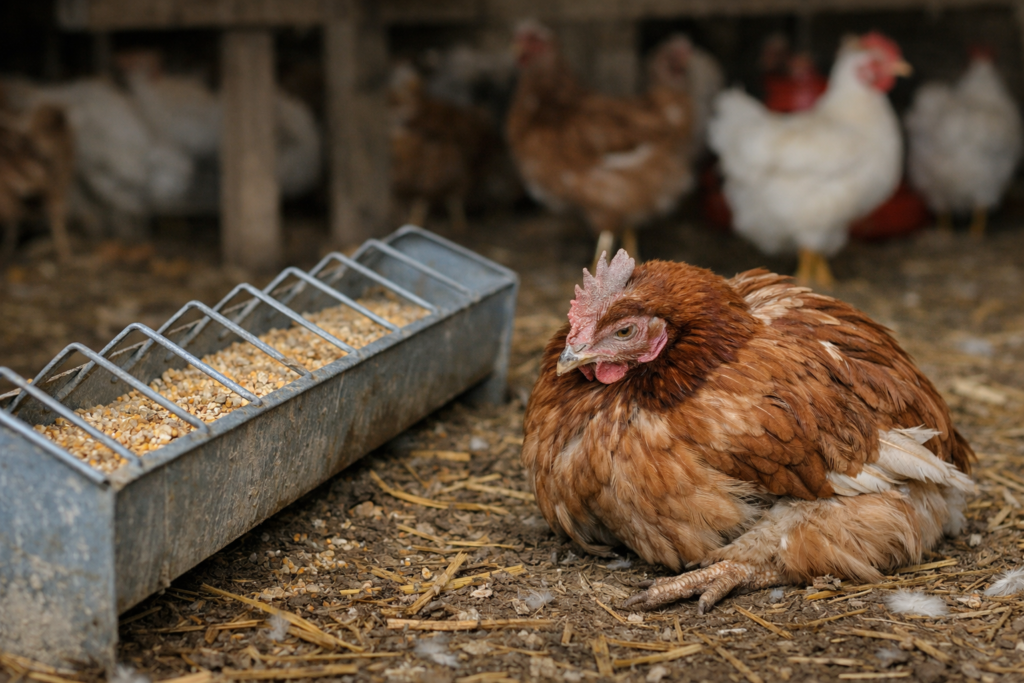
The most important piece of information during diagnosis is the point at which the problem began. Low body weight on day seven primarily directs attention to chick quality, transport conditions, poultry house preparation, temperature, water intake and starter feed. If the flock started correctly but performance deteriorated later, the focus should be on an event occurring during a specific period, such as a diet change, a rise in outside temperature, ventilation problems, deteriorating litter quality, increased disease pressure or restricted access to water.
| Observation | What should be checked first? |
|---|---|
| Low body weight already at day 7 | chick quality, crop fill, floor temperature, water and starter feed |
| Good first week followed by slower growth | feed change, pellet quality, water intake, environment and health |
| Good body weight but high FCR | feed wastage, feed structure, temperature, intestinal health and calculation method |
| Increasing CV | feeder and drinker distribution, temperature differences within the house and flock health |
| Sudden fall in water consumption | drinker performance, water pressure, water temperature and health status |
| High water intake and wet litter | drinker system, feed composition, water quality, ventilation and intestinal health |
| Deteriorating results late in the cycle | heat stress, stocking density, ventilation, air quality and feed availability |
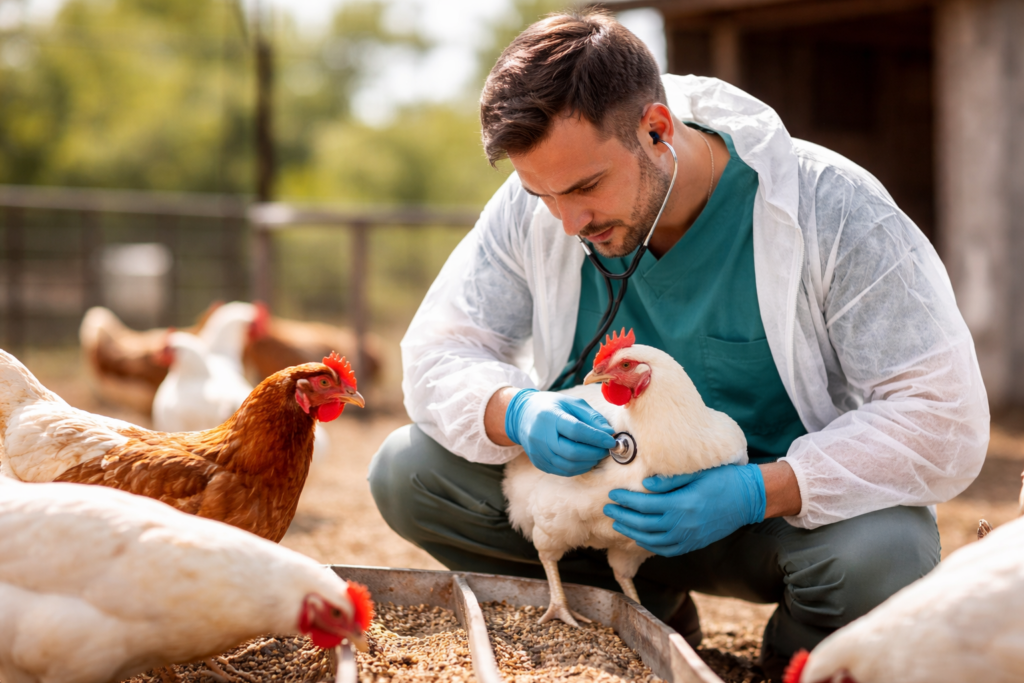
Changing several parameters at the same time can make it difficult to determine the true cause. It is generally better to confirm the accuracy of the data and the proper operation of equipment first, then assess the birds clinically, and only afterwards modify nutrition or environmental settings. A rapid veterinary assessment is particularly advisable when sudden changes are observed in water consumption, feed intake, flock activity or mortality.
Water – a parameter that should not be treated as secondary
On a broiler farm, water intake is one of the quickest available indicators of flock condition. Changes in consumption may occur before a visible reduction in feed intake or body weight. Daily water use should therefore be recorded and analysed together with feed intake, temperature, mortality and body weight. A sudden reduction may result from a technical problem in the drinking system, inappropriate water pressure, reduced bird activity or health disturbances. Increased consumption may accompany higher temperatures, dietary changes or problems that also affect litter quality.
During the first 24 hours after placement, Cobb indicates a minimum consumption of approximately 1 ml of water per bird per hour. Later in the production cycle, however, water intake should not be assessed solely on the basis of one fixed water-to-feed ratio because it is influenced by temperature, drinking system, mineral and sodium concentrations in the diet, bird age and environmental conditions. The most useful approach is to establish a normal baseline for each poultry house and detect deviations from that pattern quickly.
Biosecurity and preventive health management for Cobb 500
The rapid growth of broilers leaves little time to react when flock health deteriorates. Effective biosecurity should reduce the risk of introducing pathogens onto the farm and limit their movement between poultry houses. This includes controlling people and vehicles, cleaning and disinfecting equipment, protecting buildings against rodents and wild birds, dealing correctly with spilled feed and maintaining an appropriate order of visits to different flocks. Where several age groups are present, younger flocks should be visited before older ones, and equipment transferred between houses must be thoroughly cleaned and disinfected beforehand.
The Cobb 500 vaccination programme should be based on the conditions of the individual farm. Some vaccinations may be performed at the hatchery, for example on the first day of life or using in ovo vaccination, but the choice of vaccines and timing should take into account breeder flock health status, maternal antibody levels, the farm’s disease history and the current epidemiological situation. A vaccination programme should not be copied automatically from another farm simply because it also rears Cobb 500 broilers.
Is Cobb 500 an economical broiler?
The economics of Cobb 500 production cannot be determined by one parameter alone. The lowest FCR does not always produce the highest financial return if achieving it requires an exceptionally expensive diet or if keeping the flock longer is no longer economically justified. Similarly, the highest slaughter weight does not necessarily result in the highest margin. In practice, the cost of the chick, feed price and consumption, livability, growth rate, energy consumption, preventive health costs, final body weight and the price received per kilogram of live weight all need to be analysed together. For one farm, the optimum marketing age may be around 35–38 days, while another production model may justify keeping heavier birds for longer.
It is also worth remembering that maximising biological performance is not always the same as optimising economic performance. A more nutrient-dense diet may improve growth rate or certain carcass characteristics while also costing more. The final decision should therefore take into account ingredient prices, customer requirements and the actual results achieved on the individual farm rather than relying solely on the values presented in the breeder’s performance table.
Cobb 500 chicks from Veterinary Support
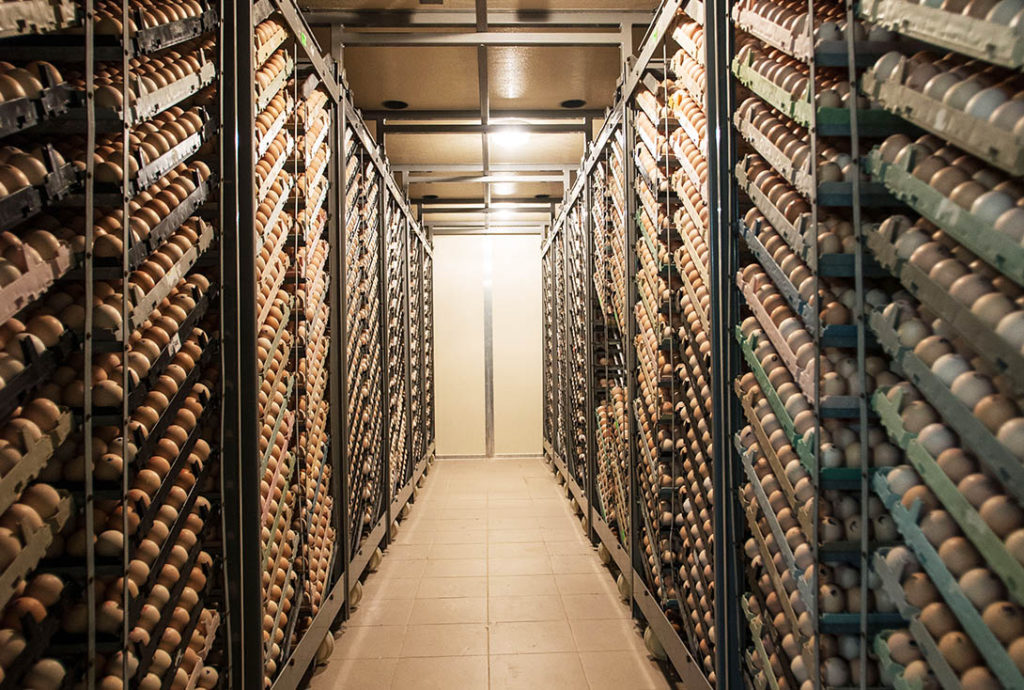
Successful Cobb 500 production begins with the quality of the biological material. Chick origin, breeder flock health, correct incubation, hatchery selection, appropriately planned vaccination and transport conditions all influence the potential of the batch entering the poultry house. For this reason, assessment of chick quality at delivery should be treated as the first stage of monitoring the entire production cycle rather than merely a formal step before brooding begins.
Veterinary Support supplies Cobb 500 day-old chicks from verified hatcheries. Batches are assessed for characteristics including appearance, body weight, mobility, vitality and uniformity, and preventive vaccination can also be arranged according to individual requirements. Veterinary Support organises chick deliveries to farms and provides specialist veterinary assistance in preventive health management, biosecurity and the investigation of production problems.
More information about availability and ordering conditions is available here: day-old chicks and broiler chickens.
Frequently asked questions about Cobb 500
Is Cobb 500 a chicken breed?
The term “Cobb 500 breed” is frequently used in everyday language and online searches, but technically Cobb 500 is a commercial broiler hybrid developed for meat production.
How much does Cobb 500 weigh at 7 days?
According to the performance objectives for an as-hatched Cobb 500 flock, body weight at seven days is approximately 202 g. This corresponds to roughly 4.8 times the starting body weight of around 42 g.
How much does Cobb 500 weigh at 14 days?
The target Cobb 500 body weight at 14 days is approximately 570 g. By this stage, cumulative feed intake is around 588 g and the published FCR is approximately 1.029.
How much does Cobb 500 weigh at 21 days?
At day 21, an as-hatched Cobb 500 broiler reaches approximately 1,116 g according to the performance table. Cumulative feed intake is around 1,320 g and FCR approximately 1.182.
How much does Cobb 500 weigh at 28 days?
Target body weight at day 28 is approximately 1,783 g. By this stage, cumulative feed intake is around 2,359 g and target FCR approximately 1.322.
How much does Cobb 500 weigh at 35 days?
According to the official performance objectives, Cobb 500 weighs approximately 2,521 g at day 35. Cumulative feed intake is around 3,635 g and FCR approximately 1.441.
How much does Cobb 500 weigh at 42 days?
The target body weight of an as-hatched Cobb 500 broiler at day 42 is approximately 3,278 g. Cumulative feed intake is around 5,100 g and the published FCR is approximately 1.555.
How much feed does Cobb 500 consume to reach 3 kg?
According to the performance table, Cobb 500 reaches approximately 2,954 g on day 39 with cumulative feed intake of around 4,450 g. On day 40, the target body weight is approximately 3,062 g and cumulative feed intake approximately 4,663 g. In practice, actual consumption depends on housing conditions, feed quality, flock health and technical feed losses.
What FCR should Cobb 500 achieve?
For an as-hatched flock, the target value is approximately 1.441 at day 35 and 1.555 at day 42. It is important to remember that the breeder’s figures do not account for mortality, so direct comparison with farm results requires the same calculation methodology.
How long should Cobb 500 chicks receive starter feed?
In the feeding programme for medium and large broilers, Cobb uses starter feed approximately from day 0 to day 12. For smaller broilers, the company provides a shorter programme, so the timing of a diet change should take into account target body weight, first-week performance and the overall production plan.
How can Cobb 500 flock uniformity be improved?
First, determine whether the problem was already present at chick delivery or developed during rearing. The next step is to check feeder and drinker distribution and availability, temperature differences between different parts of the poultry house, feed structure, flock health and changes in CV over successive weeks.
Why does Cobb 500 fail to reach the expected weight?
A common mistake is to look for one universal cause. If the problem appears during the first week, chick quality, temperature, water availability and starter feed should be reviewed. If growth deteriorates later, attention should be given to feed changes, environmental conditions, ventilation, stocking density, litter quality and intestinal health.
Where can Cobb 500 chicks be purchased?
Cobb 500 day-old chicks are available from Veterinary Support. The company works with verified hatcheries and provides chick quality assessment, the option to arrange vaccinations and delivery organisation. Current availability should be confirmed before the planned placement date.